What Exactly Is Happening With AI Founding Fathers on Right-Wing Podcasts?
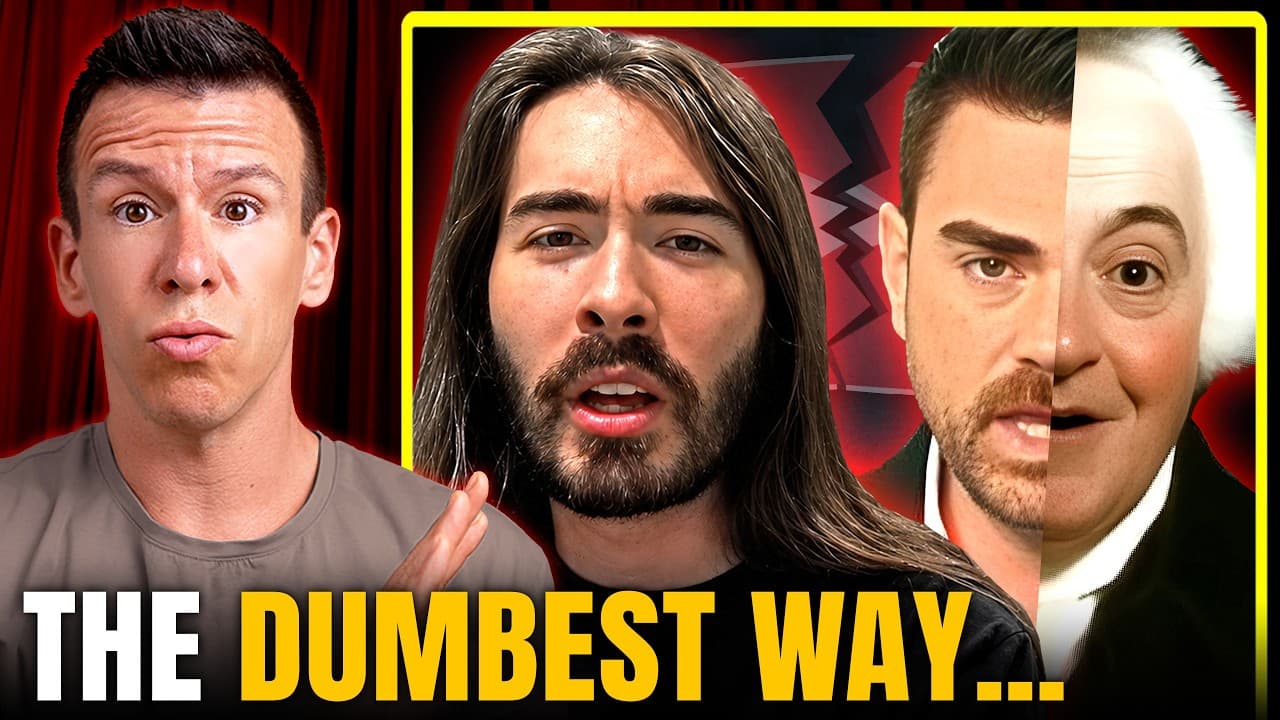
Philip DeFranco's August 11, 2026 episode opens with what might be the most viscerally unsettling trend of the year: right-wing podcasters hosting AI-generated, fully animated versions of George Washington, Thomas Jefferson, and Benjamin Franklin — and having those figures speak in support of contemporary political agendas.
The segment, which kicks off at the top of the episode, shows clips of figures like Glenn Beck conducting what appear to be earnest interviews with these AI avatars. The models respond in first person, as if they are the actual historical figures, offering opinions on issues that simply did not exist in their lifetimes.
As one commenter, @snart2195, pointedly noted:
"George Washington would never have said the word 'homeowner' because in his time there was no other way to live in a home. Landowner, maybe."
It's a small linguistic slip, but it reveals the fundamental lie at the core of the project — these are not historically-sourced responses. They are LLMs with a cosmetic skin.
Who Is Behind These AI Historical Figures, and Why Does It Matter?
DeFranco breaks down the mechanics: the AI personas are not, as some outlets have suggested, trained exclusively on the writings of each Founding Father. As commenter @lawng6027 explains:
"The LLM wasn't only trained on Washington's docs. He didn't write enough to train an LLM on and have it be self-contained. So it's Grok with a Washington shellacking on top."
This is the critical distinction. When the AI "Washington" speaks, it is not drawing from verified historical documents — it is generating statistically probable text through a general-purpose model that has been prompted to perform a character. The result is a political ventriloquist act with a powdered wig.
The community reaction was swift and alarmed:
"The white house wants to argue their points by essentially sitting a founding father on their lap like a ventriloquist dummy." — @bewarethechameleon (237 likes)
"Thomas Jefferson was fond of the phrase 'the world belongs to the living, not the dead.' I wonder why the AI isn't telling people that." — @NarpytheCrimeDog (240 likes)
"This is the exact kind of manufacturing of consent that historians warn about when authoritarianism is on the rise." — @adhyperdad3027 (32 likes)
A teacher in the comments, @preachez, flagged an urgent downstream consequence: educators who use AI-generated historical figures as teaching tools — even responsibly — risk training students to trust all AI historical figures by default. The pedagogical damage could compound for a generation.
@frankied.roosevelt6232 also pointed out a glaring factual omission: Benjamin Franklin wrote about abortion and supported it, even providing guidance on safe methods. The AI version appears not to reflect this documented historical position.
How Is the Internet Reacting to YouTube's Partner Program Changes?
The episode's second major story — YouTube quietly changing its Partner Program requirements — landed with equal force in the comment section, though the anger here is directed squarely at the platform itself.
DeFranco covers how YouTube's stated justification leans on combating AI slop, but the practical effect is raising the barrier for small, human-led channels to monetize. The community called this out immediately:
"Raising monetization thresholds to stop AI slop is like burning down the house to catch a spider, it only hurts small human creators." — @HolyWhisper-v7i (94 likes)
"If YouTube truly cared about stopping AI slop, it would stop allowing me to be beaten over the head with horrible AI slop commercials. But no, as long as they continue to profit from it, they don't care." — @taylorlarson9669 (161 likes)
"The YouTube thing is so very YouTube. Not addressing the issue, spoil it for everyone else. 10/10." — @RGBeanie (8 likes)
The consensus from DeFranco's audience is that YouTube's policy is not surgical — it's a blunt instrument that will hollow out the mid-tier creator economy while leaving well-funded AI content farms largely untouched.
What Else Did DeFranco Cover, and Why Should You Care?
The episode doesn't slow down. Other major stories in the August 11 rundown include:
- Immigration agents caught racially profiling people on camera, with a commenter drawing a chilling historical comparison to governments forcing marginalized groups to wear visible markers of "otherness."
- Massachusetts expanding abortion access throughout the entire pregnancy with physician guidance — a significant legislative development covered with notable nuance.
- Lauren Boebert's son charged with child exploitation, covered briefly but with appropriate gravity.
- Nvidia partnering with Wall Street firms to raise $500 billion for AI data center infrastructure — a figure that prompted commenter @Daemascus to push back on the "AI factory" framing, arguing these are simply "LLM data centers that turn electricity and money into heat, noise, and slop."
- Trump signing an executive order cutting childhood vaccine recommendations, a story with significant public health implications.
What Happens Next — and What Does This Mean for the Future of Information?
The AI Founding Fathers story is not a fringe curiosity. It is a proof-of-concept for a scalable disinformation format: historically-trusted figures, resurrected digitally, made to endorse present-day political positions with zero accountability. As the technology becomes cheaper and more accessible, the barrier to producing this content approaches zero.
YouTube's Partner Program changes, meanwhile, will likely accelerate a bifurcation of the creator economy — established channels with large audiences will weather the shift, while the next generation of independent journalists and commentators faces a steeper climb to viability. If the policy fails to meaningfully reduce AI slop on the platform while visibly suppressing human creators, expect significant industry and regulatory pressure on YouTube's leadership heading into 2027.
DeFranco's audience is not panicking — but they are paying close attention. And increasingly, that attention is being shaped by the very technologies these stories are warning about.