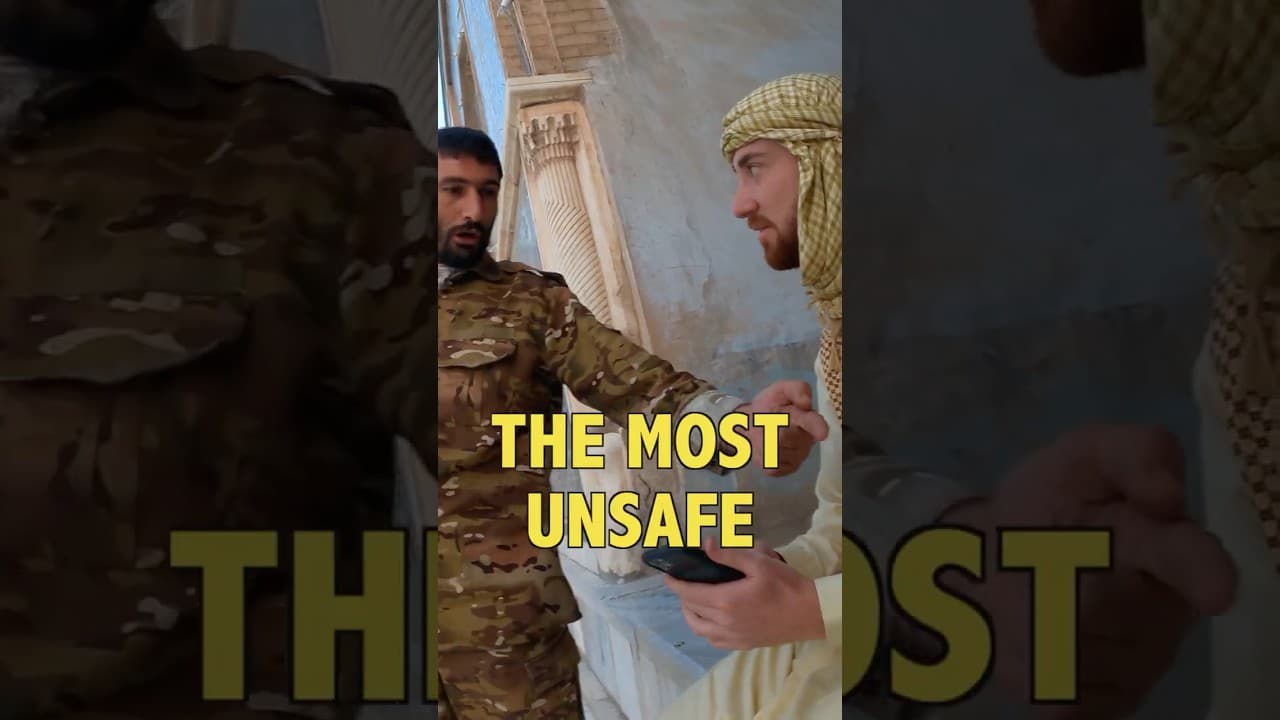
What Exactly Did Drew Binsky Say Happened in His Most Dangerous Travel Moments?
Drew Binsky, the American travel creator famous for completing every country on Earth, dropped a video on August 12, 2026 titled 3 Places I Felt The Most Unsafe As A Traveler — and while the locations themselves may not shock seasoned geography nerds, the personal stories attached to them absolutely land with impact.
Binsky walks through three specific destinations where danger wasn't abstract or theoretical — it was immediate, physical, and in at least one case, involved people he traveled with. Without spelling out every detail in the video, the narrative arc moves through a region in Afghanistan (around Kandahar), Haiti, and Somalia (specifically, Mogadishu) — three places that consistently top global instability indexes for very different but interconnected reasons.
What makes this video land differently than a generic "dangerous places" listicle is Binsky's first-person framing. He isn't narrating from a distance — he's recounting moments where he made real-time decisions about whether to keep moving or pull back. One story involves a friend who appears to have been in serious jeopardy, though the video leaves enough ambiguity that viewers in the comments are actively begging for a follow-up.
Who Is Drew Binsky and Why Does His Opinion on Dangerous Travel Actually Matter?
Drew Binsky isn't a gap-year blogger chasing clout in conflict zones. He completed his mission of visiting all 197 countries — a credential that gives him a genuinely unique frame of reference when ranking personal risk. He's been doing this professionally for over a decade, building an audience of millions on YouTube through a mix of cultural storytelling, geopolitical curiosity, and, yes, calculated risk-taking.
That context matters here. When Binsky says a place felt unsafe, he's comparing it against a mental database that includes North Korea, Venezuela, active war zones, and remote islands with zero infrastructure. The bar is high. So when three specific countries make the final cut for this video, it carries weight that a first-time traveler's list simply wouldn't.
It's also worth noting — as some commenters flagged — that this video appears to be a repost or re-edit of older footage, which is common practice for creators restructuring their archives. That doesn't diminish the stories, but it does explain why longtime fans in the comments are clocking it immediately.
How Is the Internet Reacting to Binsky's Most Dangerous Travel Confessions?
The comment section is a blend of genuine awe, dark humor, and pointed criticism — exactly what you'd expect when a creator posts footage from active conflict zones.
@JoshuaJayMusic set the tone immediately with the top comment:
"So, Afghanistan, Haiti and Somalia. Never would have guessed."
The sarcasm is earned. These aren't obscure picks — they're the places that appear on every State Department travel advisory. But several commenters went deeper, raising questions the video itself didn't fully answer:
"On the last story…was your friend okay??" — @GoshblessMaryland
"What happened to your friends who were kidnapped?" — @Ane127
These unanswered threads are doing real work in the comments, keeping engagement alive and signaling that Binsky may have more to share in a follow-up. The curiosity is genuine — not just engagement-farming speculation.
On the more skeptical side, @thetrawlerman voiced what a significant chunk of the audience was thinking:
"I don't even understand why you would go into a gang controlled place knowing it's controlled by them."
And the hyperbolic fan appreciation was out in full force too:
"This man would definitely survive a zombie apocalypse." — @NightMare-j4v9c
"This guy would definitely survive 500 atomic bombs combined with a zombie apocalypse." — @warthunder2-hd
The @imxploring comment — simply "Common factors." with five likes — is quietly the sharpest observation in the thread, nodding at the geopolitical and socioeconomic threads linking all three locations without spelling it out.
What Does This Video Mean for Binsky's Channel — and the Conflict Travel Genre?
This kind of content sits in a genuinely complicated space. Binsky has long walked the line between responsible cultural documentation and thrill-seeking content — and this video nudges closer to the latter without fully crossing it. The emotional weight of a friend potentially being kidnapped, treated as a narrative beat, will read very differently to a casual viewer versus someone who has actually worked in conflict zones.
That tension is probably why the video is already generating the mix of responses it is — admiration, concern, and a healthy dose of side-eye.
Looking ahead, the two unanswered questions about kidnapped friends and companion safety create a natural opening for a follow-up video — one that could be significantly more impactful if Binsky addresses the outcomes directly and honestly. As the conflict travel genre matures on YouTube, audiences are increasingly demanding accountability alongside adventure. Creators who lean into transparency about the real costs and consequences of dangerous travel — rather than just the adrenaline — are the ones building durable, trusted channels. Binsky has the credibility to do exactly that, and this video may be the setup for his most important piece of content yet.