What exactly happens in the Final Fantasy Resonance Tokyo Game Show trailer?
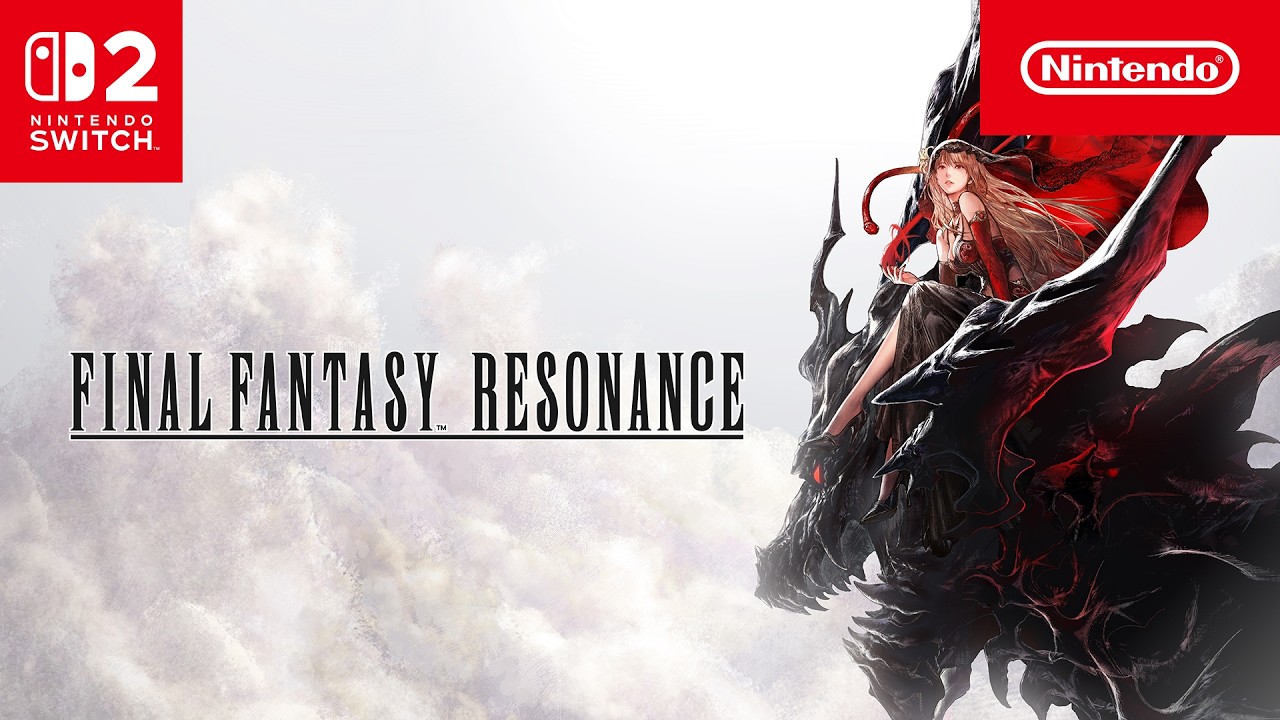
Nintendo of America and Square Enix brought one of the season's most anticipated reveals to Tokyo Game Show 2026, dropping a proper deep-dive trailer for Final Fantasy Resonance on Nintendo Switch 2. This is the first mainline Final Fantasy built entirely around the gorgeous HD-2D pixel-art engine — the same visual language that redefined Octopath Traveler and the Live A Live remake — now applied to the franchise that invented the JRPG genre.
The trailer confirms a world packed with content that goes well beyond a simple nostalgia play. Players will encounter Gilgamesh, the beloved wandering swordmaster who has haunted the series for four decades, alongside a fully fledged Colosseum featuring deadly monsters and scalable rewards. There's also the Chamber of Arms, a gauntlet mode where legendary weapons serve as sealed prisons for formidable supernatural foes, capping off with a climactic encounter against the Ultima Weapon — one of Final Fantasy's most iconic superbosses.
The scope, according to both the trailer and demo players, is significantly larger than many expected from an HD-2D release.
What new features and content does Final Fantasy Resonance include?
Based on the trailer and the widely available demo, here's a breakdown of what's confirmed for the full release:
- Gilgamesh as a recurring wandering encounter, staying true to series lore
- The Colosseum — an optional arena with monster battles and tiered rewards
- Chamber of Arms — a post-game-style challenge mode tied to legendary weapons
- Ultima Weapon — confirmed as a major boss encounter
- HD-2D visual engine — the same tech behind Octopath Traveler II, pushing the Switch 2's capabilities
- Free demo available now covering the first full chapter of the game
- Original musical score that multiple commenters have already flagged as a series highlight
The demo alone has generated serious word-of-mouth. One player noted logging 20 hours on the PC demo before the console version even launched. Another said they had to stop mid-demo because the anticipation for the full game became unbearable. That's the kind of organic enthusiasm money rarely buys.
What are fans saying about Final Fantasy Resonance — and how bad is the key card backlash?
The comment section is a fascinating split between genuine hype and a simmering hardware controversy that Nintendo cannot afford to ignore.
On the excitement side, the response to the game itself has been close to rapturous:
"Best FF of the last decade." — @iliasmastrogiorgos5508
"CANNOT WAIT!! FF IS BACK!!" — @AstrayZack
"Loved every minute of the demo." — @victorpope8278
"The scale is so much bigger than I thought." — @Teh8Swords
The musical score is a recurring talking point, with multiple commenters specifically calling out the soundtrack as exceptional — a meaningful signal for a franchise whose music has always been central to its identity.
But threading through all of that enthusiasm is a loud, coordinated frustration about the Switch 2 key card format. Unlike the Switch 1 version — which ships as a complete physical cartridge containing the full game — the Switch 2 edition uses Nintendo's new key card system, which functions essentially as a license token rather than a self-contained physical product.
"Reminder: Switch 1 cartridge and Switch 2 key card. You should all know which version to buy..." — @MasterStacona (38 likes)
"I will buy it on Nintendo if it were a full physical release instead of a keycard." — @riony6955
"Could've put the whole game on the cartridge for Switch 2." — @dthorizon
"I'm buying the SW1 version because it's full on cart and playing it on the SW2." — @SLIMShady-m7v (17 likes)
The workaround being suggested — buying the Switch 1 physical version and simply playing it on backward-compatible Switch 2 hardware — is gaining genuine traction. It's a consumer behavior pattern that Nintendo should find uncomfortable: players are actively engineering around the Switch 2's own ecosystem to preserve physical ownership. There's also one recurring, slightly tongue-in-cheek observation doing the rounds:
"It's pretty vague from the trailer, but something tells me this game will feature crystals." — @jnh_dnb (43 likes)
Classic Final Fantasy, classic fandom.
Is Final Fantasy Resonance worth buying — and which version should you get?
Final Fantasy Resonance looks, by every available measure, like the real deal. The HD-2D engine is a genuine artistic achievement when applied to this IP, the content breadth is larger than early previews suggested, and demo reaction has been exceptional across both PC and console platforms. For fans who felt the mainline series lost its footing somewhere between the numbered sequels and mobile spinoffs, this appears to be the course correction they've been waiting for.
The version question, though, is genuinely thorny. If physical ownership matters to you, the Switch 1 cartridge is currently the only option that delivers a complete game on a physical medium — and it plays on Switch 2 hardware. The Switch 2 key card offers presumably better performance and visual fidelity, but at the cost of true physical ownership.
The demo is free. Play it. The decision about which version to buy can wait — but the community consensus is leaning hard toward the Switch 1 cart.
Virality Prediction: Expect the Switch 2 key card debate to dominate gaming discourse on X/Twitter through the weekend of September 26–27, 2026, likely pulling in responses from industry analysts and physical media advocates. The game itself is positioned to be a genuine holiday-season conversation piece. If Square Enix or Nintendo addresses the cartridge situation with a statement, that response will trend independently. Watch this space — Final Fantasy Resonance could become the release that forces a broader reckoning with Nintendo's physical media strategy heading into 2027.