Why Is Everyone Talking About the LTT Tech House Air Conditioning Video?
It is October 2026, and Linus Sebastian is still dealing with the consequences of buying one of YouTube's most ambitious content properties — the LTT Tech House. The latest chapter in that ongoing saga drops today, and it's not about CPUs or GPU benchmarks. It's about staying cool.
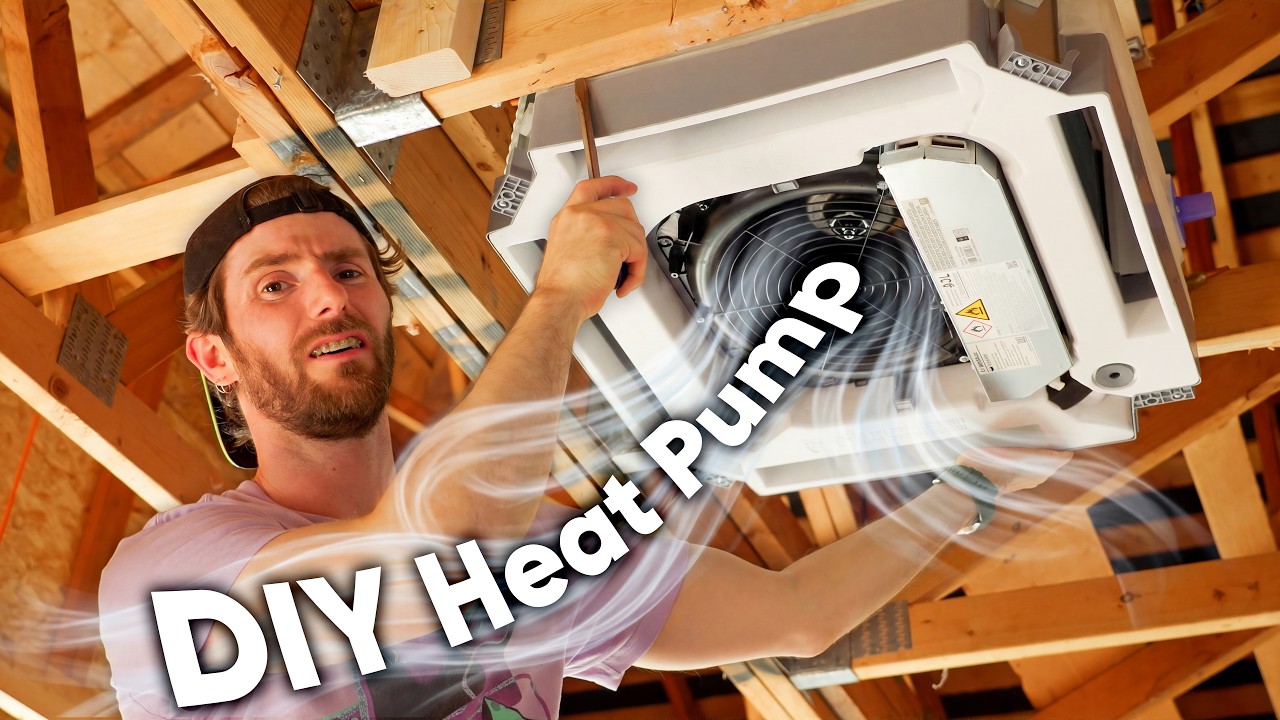
In a video published October 1, 2026, Linus and the Linus Tech Tips crew tackle a very real, very sweaty problem: the Tech House had no proper air conditioning. Their solution is a heat pump system with ductless mini-split units, and Linus has strong, well-researched opinions about why this is the right call for most modern homes.
What Are Mini-Split Heat Pumps and How Do They Work?
For the uninitiated, a mini-split system skips traditional ducted HVAC entirely. Instead, an outdoor condenser unit connects directly to individual indoor air handler units (the 'mini-splits') via refrigerant lines, allowing room-by-room climate control with no ductwork required.
The video's chapter structure is essentially a step-by-step installation guide:
- Spec'ing the system — sizing BTU capacity for each room
- Understanding the heat pump cycle — how it moves heat rather than generating it
- Mounting indoor units — wall placement, clearance, and drainage considerations
- Running refrigerant lines — the most technically demanding step
- Installing and commissioning the condenser
- Leak testing — critical before charging the system
- The payoff — cold air, finally
The result is a genuinely educational piece of content that doubles as a real home improvement project, not a staged demo.
What Are the Key Specs and Pros & Cons of Mini-Split Systems?
| Feature | Mini-Split Heat Pump | Traditional Ducted HVAC | |---|---|---| | Ductwork Required | No | Yes | | Zone Control | Per-room | Whole-home or zoned (expensive) | | Installation Complexity | Moderate (DIY-possible) | High (professional only) | | Energy Efficiency (SEER) | Very High (18–30+) | Moderate (14–20) | | Cold Climate Performance | Varies by model | Consistent with gas backup | | Upfront Cost | Medium-High | High | | Backup Heat Type | Resistive electric | Gas or electric |
The Good: Mini-splits are exceptionally efficient in moderate climates, offer granular zone control, and avoid the energy losses inherent in leaky ductwork. For a house being renovated from the ground up — or a content studio where different rooms have wildly different heat loads — they make genuine sense.
The Bad: As commenter @AarPlays correctly flagged, cold-climate performance is a real consideration, particularly in Canada where the Tech House is located. Standard heat pumps struggle to extract heat from air at extreme sub-zero temperatures, and the resistive backup heating that kicks in can be brutal on electricity bills. Selecting a cold-climate-rated heat pump with a rated heating capacity down to -25°C or lower is non-negotiable for Canadian winters.
Did Linus Make a Mistake in the Video?
Eagle-eyed viewers caught a notable on-screen error. At the 13:57 timestamp, a graphic displayed -15°C as -59°F. The correct conversion is 5°F — a significant difference when you're trying to make the case for a heat pump's cold-weather capabilities.
Commenters @josephbuys, @AlienKing321, and @skylergibson8528 all independently flagged the error. It's a minor production slip, but in a video making technical arguments about heating capacity thresholds, it's the kind of thing that undercuts credibility with a technical audience.
What Is the Internet Saying About the Tech House Mini-Split Install?
The comment section is a mix of genuine HVAC enthusiasm, nostalgia, and the usual LTT community sharp eyes.
"Technologies: Connected" — @pavelsoukharev7215 (45 likes)
A clean, earned reference to the beloved educational channel Technology Connections, whom Linus explicitly shouts out for their definitive portable AC video. The callback landed well.
"Technology Connections is a true gem in the YouTube community" — @alexabney7913 (73 likes)
The most-liked comment in the thread isn't about mini-splits at all — it's about Technology Connections. That tells you something about how well the shout-out landed.
"ill miss the father son linus Elijah duo in the tech house" — @Welly-b (13 likes)
A thread of genuine warmth for the Linus and Elijah dynamic that has defined the Tech House series, suggesting the audience is emotionally invested in these builds beyond just the technical content.
"The fact that it's October and these guys are showing footage from June" — @noobs_guide_to_everything (8 likes)
A fair observation — the production timeline gap between filming and publishing is visible, which is simply the reality of complex renovation content.
Should You Actually Install a Mini-Split System at Home?
For most people in temperate to warm climates, the answer leans strongly toward yes. Mini-splits have crossed from 'niche HVAC option' to mainstream recommendation status, and videos like this one accelerate that shift by demystifying the installation process for a technically literate audience.
For Canadian or northern US homeowners, the calculus is more nuanced. Verify your unit's Heating Seasonal Performance Factor (HSPF) and minimum operating temperature before committing. A unit rated only to -15°C in a region that regularly sees -25°C will fail you when you need it most — and the resistive backup heat that saves it will cost you dearly.
The LTT Tech House install appears sound for its use case. It's a production facility with high internal heat loads from equipment, located in a region where cooling demand is the primary driver. Mini-splits are the correct answer.
Virality Prediction: Expect this video to generate sustained search traffic through the week as homeowners in the Northern Hemisphere — already mentally planning for next summer — search 'mini-split installation' and 'heat pump vs central air.' The Technology Connections cross-community enthusiasm will likely push clips into HVAC and home improvement subreddits by this weekend, giving LTT an audience extension well beyond its core tech demographic. Long-term, this becomes a reference video in the ongoing Tech House series — the kind of evergreen content that compounds in value for months.